Leaks · 8 min read
Low Water Pressure in the Whole House? Causes and Fixes
Weak water at every tap usually traces back to a valve, a leak, aging pipes, or the supply itself. Here is how to narrow it down at home and what a plumber checks first.
By Full House Plumbing Service · Jacksonville plumbers with ten years of hands-on experience
Published · Updated
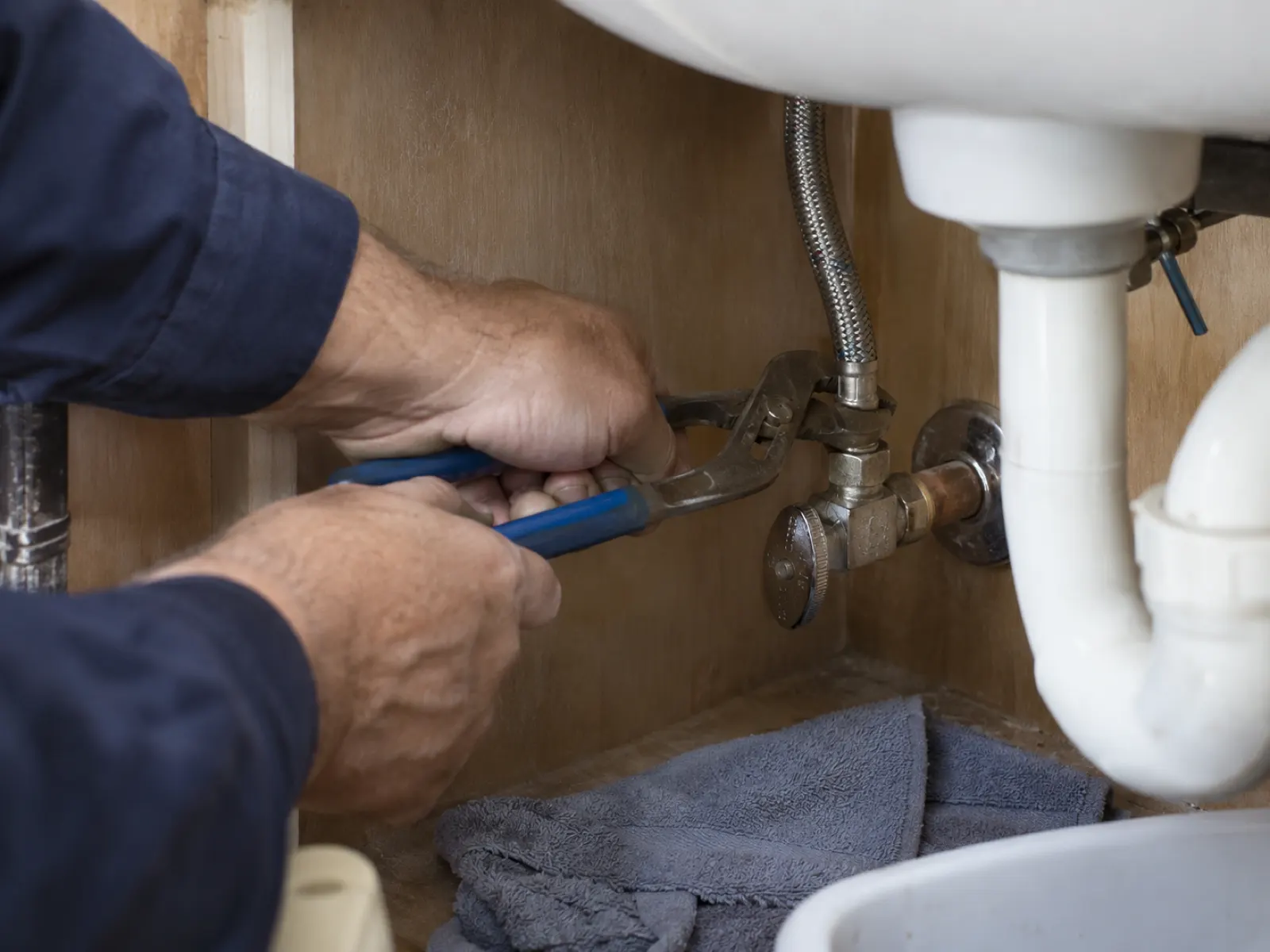
Low water pressure throughout the whole house usually comes from one of a few places: a main shut-off or meter valve that is not fully open, a worn pressure-reducing valve, a hidden leak, old pipes narrowed inside by corrosion, or a problem on the supply side. If only one fixture is weak, the cause is almost always that fixture.
The quickest way to a fix is to work out where the low pressure shows up before assuming anything. This guide walks through a simple diagnostic order, the checks you can safely do yourself, and what a plumber measures when the answer is not obvious.
Is it one fixture, the whole house, or only hot water?
Where the weak pressure shows up tells you where to look, so test several fixtures before anything else. Work through this order:
- Turn on the cold water at a few fixtures in different parts of the house, plus an outdoor spigot near where the water line enters.
- If one fixture is weak and the rest are normal, the problem is at that fixture — its aerator, showerhead, cartridge, or the small shut-off valve beneath it.
- If every fixture in one bathroom or one area is weak, look at the branch line or valves feeding that part of the house.
- If everything is weak, hot and cold, the cause is on the main line: the main shut-off, a pressure-reducing valve, a leak, aging pipes, or the supply itself.
- If only the hot water is weak at every fixture, the water heater or its valves are the likely source.
- Ask a neighbor or two. If their pressure dropped at the same time, the issue is probably on the supply side, not in your house.
Timing is a useful clue too. A sudden drop often points to a valve that was bumped or left partly closed, a new leak, or work on the water supply. A gradual decline over months or years is more typical of mineral scale, a wearing pressure-reducing valve, or corroding pipes.
Can a clogged aerator or showerhead cause low pressure?
Yes — a clogged aerator or showerhead is the most common reason a single faucet or shower loses pressure. Mineral scale and small bits of sediment collect in the fine screens and nozzles, and in a home with hard water they build up steadily.
- Close the sink drain so small parts cannot fall in, then unscrew the aerator from the tip of the faucet by hand. If it is stuck, wrap it in a cloth before gripping it with pliers so the finish is not scratched.
- Rinse out any grit and note the order of the small parts inside.
- Soak the aerator in white vinegar for an hour or more to loosen scale, scrub gently with an old toothbrush, rinse, and reinstall.
- For a fixed showerhead, fill a plastic bag with vinegar, fasten it around the head so the nozzles are submerged, and leave it for a few hours before running the water.
Sediment often gets knocked loose after any work on the water lines, so a sudden weak faucet right after a repair is frequently just a clogged aerator. If a clean aerator does not help, the faucet cartridge inside may be clogged or worn and need replacing.
Could a partly closed valve be the problem?
Yes, and it is one of the easiest causes to check. A main shut-off valve that was partly closed during a repair, or bumped while something was stored in front of it, will reduce pressure to the entire house.
The main shut-off is often where the water line enters the house — on an outside wall, in the garage, or near the water heater. A valve with a round wheel handle is open when turned counterclockwise until it stops; turn it gently, since older valves can be stiff. A valve with a lever handle is open when the lever runs parallel to the pipe. Be aware that an old wheel-style valve can fail inside, so the handle turns normally while the valve stays partly closed. If the only valve you can find is at the water meter itself, check with your water provider before turning it.
Can a failing pressure-reducing valve cause low pressure?
Yes. A pressure-reducing valve lowers the pressure coming in from the supply to a steadier level for the house, and as it wears, pressure can slowly drop or rise and fall unpredictably. Not every home has one.
If yours does, it is usually a bell-shaped brass fitting on the main line near the shut-off, often with an adjustment screw on top. Signs of a worn one include pressure that has declined gradually across the whole house, pressure that swings between strong and weak, or the opposite problem — banging pipes and dripping fixtures from pressure that runs too high. Turning the adjustment screw without a gauge is guesswork, so it is better to measure first. A plumber can test the valve, adjust it, or handle the valve repair or replacement if it has worn out.
Can a hidden leak lower water pressure?
A leak large enough to divert a meaningful amount of water can lower pressure, but many hidden leaks do not change pressure noticeably, so the water meter is a more reliable test than the faucets. Here is how to check:
- Turn off every water-using fixture and appliance, including irrigation and the ice maker.
- Write down the meter reading and watch the small leak indicator, if your meter has one.
- Wait at least an hour without using any water, then check again.
- If the reading changed or the indicator moved, water is going somewhere.
A moving meter, especially combined with a warm spot on the floor or a rising water bill, can point to a leak under the house. Our guide to the signs of a slab leak explains how to narrow it down further, and professional leak detection can locate the leak without guesswork.
Can old pipes cause low water pressure?
In older homes, yes. Galvanized steel water pipes corrode from the inside, and over decades the rust and scale narrow the opening until less water can get through.
Galvanized supply pipe was common in many homes built in the mid-twentieth century and earlier, and some still have it in part of the system. Clues include pressure that has declined slowly over years, brown or rusty water when a tap first opens after sitting, weaker flow at the fixtures farthest from where the water enters, and dull gray threaded pipe with rust at the fittings where pipes are visible. If only one run is badly restricted, replacing that section through pipe repair can restore flow. When the corrosion runs through the whole system, repiping the house replaces the narrowed pipe all at once.
Why is only my hot water pressure low?
If only the hot water is weak at every fixture, the problem is almost always at the water heater or the valves and connections around it. Cold water bypasses the heater, which is why it still flows normally.
- A partly closed valve on the cold water line feeding the heater — the easiest thing to check.
- Sediment and scale from the tank collecting in the heater's outlet fittings or the pipes just after them.
- In a tankless unit, scale inside the heat exchanger or a clogged inlet filter screen, which hard water makes more likely.
- If only one faucet has weak hot water, a clogged or worn mixing cartridge in that faucet rather than the heater.
How do I know if the problem is on the supply side?
If your neighbors noticed the same drop at the same time, the cause is most likely outside your home. Work on nearby water mains or a problem in the supply system can lower pressure for a whole street.
In that case, contact your water provider — they can tell you whether there is known work or a problem in your area. If the weak pressure is only at your house, the cause is more likely on your side of the meter, and the checks above are the place to start. Homes on a private well are a separate case: pressure there depends on the well pump, pressure tank, and pressure switch.
What does a plumber check to diagnose low water pressure?
A plumber starts by measuring the pressure instead of guessing at it. A pressure gauge threaded onto an outdoor hose bib or laundry connection gives a real number, and residential water pressure is commonly recommended to fall roughly between 40 and 80 psi.
- Static pressure: a reading with no water running anywhere in the house.
- Pressure while water is flowing, to see how far it drops when fixtures are in use.
- Readings before and after the pressure-reducing valve, where the plumbing allows it.
- A meter test to rule a leak in or out.
- Every valve on the main line, to confirm each one is fully open and working inside.
- The pipe material and its condition wherever the plumbing is visible.
Inexpensive pressure gauges that thread onto a hose spigot are sold at most hardware stores. If you take a reading yourself, note the number, the time of day, and whether anything was running. Readings from a few different days are genuinely useful to the plumber who follows up.
In our experience, most whole-house pressure problems come down to one clear cause once the numbers are in front of you, and the fix is sized to match — sometimes a valve, sometimes a section of pipe, and only occasionally more. When you are ready, you can book a visit online, or call or message us. We are open 24 hours Sunday–Friday, closed Saturday.
If you would like a plumber checking on your home on a regular schedule, our Family Plan membership includes a plumbing check-up twice a year — a good time to take a pressure reading and catch a slow decline before it becomes a daily frustration.