
Leaks · 8 min read
Signs of a Slab Leak in a Jacksonville Home (and What to Do Next)
A water bill that keeps climbing, a warm spot on the tile, the sound of running water with everything off — here is how to tell whether you have a slab leak, what to check yourself, and how each repair option compares.
By Full House Plumbing Service · Jacksonville plumbers with ten years of hands-on experience
Published · Updated
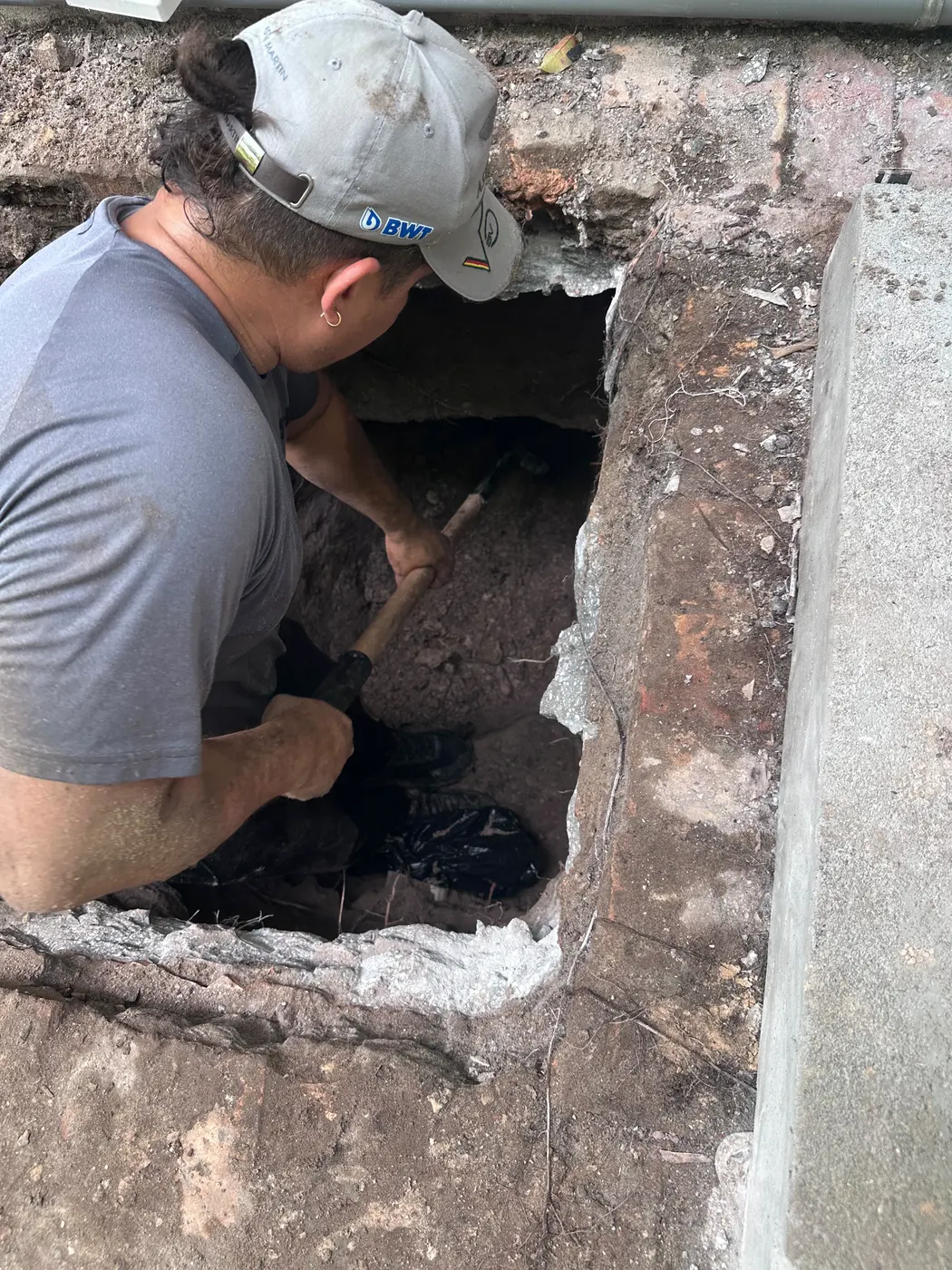
The most common signs of a slab leak are a water bill that climbs for no clear reason, the sound of running water when every fixture is off, warm spots on the floor, damp or cracked flooring near the baseboards, a musty smell, weaker water pressure, and a water heater that seems to run all the time. Most homes on the First Coast are built on concrete slabs, and in many of them the water lines run beneath or inside that slab — so when one of those pipes develops a leak, the water has nowhere obvious to go. The good news is that a slab leak can be found and fixed methodically once you know what to look for, and a few simple checks at home will tell you whether it is time to call a plumber.
This guide covers the signs, the checks you can do yourself in an afternoon, how a plumber pinpoints a hidden leak without guessing, and the three ways it can be repaired — with the honest trade-offs of each.
What is a slab leak?
A slab leak is a leak in a water line that runs under or through the concrete foundation of a house. Supply lines — the pressurized pipes carrying fresh hot and cold water — are the usual source, because they are under pressure day and night. Drain lines under the slab can leak too, but they behave differently: they only carry water when something is draining, so the clues tend to be odors and slow drains rather than a spinning water meter. This article focuses on supply line leaks, which are what most homeowners mean when they say slab leak.
Pipes under a slab can develop leaks for ordinary reasons: years of water movement wearing on the pipe wall, a pipe rubbing against concrete or gravel as it expands and contracts with hot water, a weak fitting from the original construction, or soil settling beneath the foundation. None of these is anyone's fault, and none of them is visible from inside the house until water starts showing up somewhere it should not.
What are the signs of a slab leak?
Slab leaks rarely announce themselves with a puddle. They show up as a handful of quieter clues, and the more of these you notice together, the more likely a hidden leak is the explanation:
- Your water bill rises and stays higher, even though your household's habits have not changed.
- You hear water running or hissing somewhere in the floor or walls when every faucet, toilet, and appliance is off.
- A spot on the floor feels noticeably warm under bare feet — often a sign that a hot water line is leaking beneath it.
- The flooring changes: carpet that feels damp, wood planks that cup or lift, grout that stays dark, or cracks that appear in tile or along baseboards.
- A musty or mildew smell lingers in one room no matter how often you clean, or mildew appears along the bottom of a wall.
- Water pressure at the faucets and showers feels weaker than it used to.
- The water heater runs far more than it used to, or hot water runs out sooner, because it keeps reheating water that is escaping.
Any one of these can have another cause. A running toilet can raise a bill, and a clogged aerator can lower pressure at a single faucet. What points toward the slab is a combination — a higher bill plus a warm patch of tile, for example, or a hissing sound plus a water heater that never seems to rest.
How can I check for a slab leak myself?
Before suspecting the slab, rule out the easy sources. Toilets are the most common cause of silent water use in many homes: put a few drops of food coloring in the tank, wait without flushing, and if color shows up in the bowl, the flapper is leaking. Look under the sinks and around the water heater and washing machine for drips, too. Once those are clear, the water meter test is the simplest and most reliable check a homeowner can do:
- Turn off every water-using fixture and appliance in the house, including the irrigation system, the ice maker, and any water softener that might be cycling.
- Find your water meter — usually in a covered box near the street or sidewalk — and write down the reading. Many meters also have a small leak indicator, such as a little triangle or dial, that turns whenever any water is flowing.
- Wait at least an hour, longer if you can, without using any water.
- Check the meter again. If the reading has changed or the leak indicator is moving, water is going somewhere.
If the meter moved, one more step narrows it down. Close your home's main shut-off valve and watch the meter again. If it stops, the leak is inside the house — under the slab, in a wall, or at a fixture. If it keeps moving with the house shut off, the leak is more likely on the pipe between the meter and the house, which calls for a water line repair rather than a slab leak repair.
Then use your hands and a notepad. Walk the floors barefoot, especially in the kitchen, the bathrooms, and along the path between the water heater and those rooms, and mark any spot that feels warm. Photograph any damp baseboard or cracked tile and note when you first noticed it. None of this replaces a professional leak detection visit, but it gives the plumber a head start and can shorten the search.
A warm spot on the floor plus a meter that moves with everything turned off is a strong combination. Write down what you found — the meter readings, the times, and where the floor felt warm. Those notes are genuinely useful to the plumber who comes to find the leak.
How does a plumber find a leak under a slab?
A plumber finds a slab leak by narrowing it down in stages rather than breaking concrete to look. The goal is to locate the leak closely enough that any opening in the floor is small and in the right place the first time. The exact approach varies from house to house, but most leak detection draws on a few well-established methods:
- Pressure testing: the hot and cold sides of the plumbing are isolated and tested one at a time. A line that cannot hold pressure confirms a leak and shows which side of the system it is on.
- Acoustic listening: water escaping a pressurized pipe makes sound, and sensitive listening equipment placed on the floor can pick it up through concrete. The sound is usually strongest near the leak itself.
- Thermal imaging: a thermal camera shows temperature differences across the floor, which can make a leaking hot water line stand out as a warm trail or patch.
- Moisture readings and the layout of the house: knowing where the lines are likely to run, and where flooring is holding moisture, helps connect the other clues.
A careful search also shows whether there is more than one leak and gives a sense of the pipe's general condition. That matters for the next decision, because the right repair depends as much on the rest of the pipe as on the one spot that failed.
What are the options for repairing a slab leak?
There are three common ways to fix a slab leak, and none of them is the right answer for every house. Here is how they compare.
Spot repair through the slab
The plumber opens a section of floor directly over the leak, repairs the damaged piece of pipe, and patches the concrete. It fixes the problem exactly where it is and leaves the rest of the plumbing untouched. The trade-offs are the flooring — tile, wood, or carpet over that spot has to be lifted and replaced — and the fact that it addresses only one point. If the pipe is otherwise in good shape, that is fine. If it is aging throughout, another leak somewhere else may follow.
Rerouting the line
Instead of repairing the pipe under the floor, the plumber disconnects the leaking section, leaves it in place, and runs a new line to the same fixtures through the walls or the attic. This avoids breaking up the slab and the finished floor, and it takes that stretch of pipe out from under the concrete for good. The trade-offs are small openings in drywall that need patching and, in some layouts, a longer run of pipe to reach the fixtures. Whether a reroute is practical depends on how the house is framed and where the fixtures sit.
Repiping the house
When a home has already had more than one leak, or testing shows the pipe is wearing out broadly, replacing the water supply pipes throughout the house can be the sounder long-term choice. It is the largest project of the three and involves more wall openings, but it replaces aging pipe all at once instead of chasing one leak after another. It is not the right call for a single leak in otherwise healthy pipe, and a good plumber will tell you so.
Ask why a particular repair is being recommended for your house. A clear answer should point to what the testing found — one leak or several, the condition of the pipe around it, and where the line runs — not to a general preference for one method.
The cost depends on which option fits, how easy the leak is to reach, and what flooring or finishes sit over it, so the only number worth comparing is a written quote after the leak has been located. You can read how we put quotes together on our pricing page.
What should I do while I wait for the repair?
A slab leak is worth scheduling promptly, because a hidden leak keeps running whether or not anyone notices it, and moisture under flooring tends to spread over time. In the meantime, a few simple steps help:
- Note the meter reading once a day so you can tell whether the leak is steady or growing.
- Close the main shut-off when you leave for the day or go to bed, if your household can manage without water for that stretch.
- Move rugs, furniture, and stored boxes away from damp or warm areas of the floor.
- Photograph any damage and keep your recent water bills. If you contact your homeowner's insurance company, those records help — and coverage varies from policy to policy, so it is worth asking.
When you are ready, you can book a visit online, or call or message us. We are open 24 hours Sunday–Friday, closed Saturday, and our team brings ten years of hands-on experience tracking down hidden leaks and repairing them with as little disruption to your home as the situation allows.
If you would like a plumber keeping an eye on your house on a regular schedule, our Family Plan membership includes a plumbing check-up twice a year — a natural time to mention anything you have noticed, like a water bill that has crept up or a spot on the floor that feels warmer than the rest.