Fixtures · 7 min read
Outdoor Spigots at the Beaches: Why They Corrode and What to Replace Them With
Salt air is hard on outdoor spigots. Here is why hose bibs near the ocean drip, stick, and crust over — and which types and materials hold up best when it is time to repair or replace.
By Full House Plumbing Service · Jacksonville plumbers with ten years of hands-on experience
Published · Updated
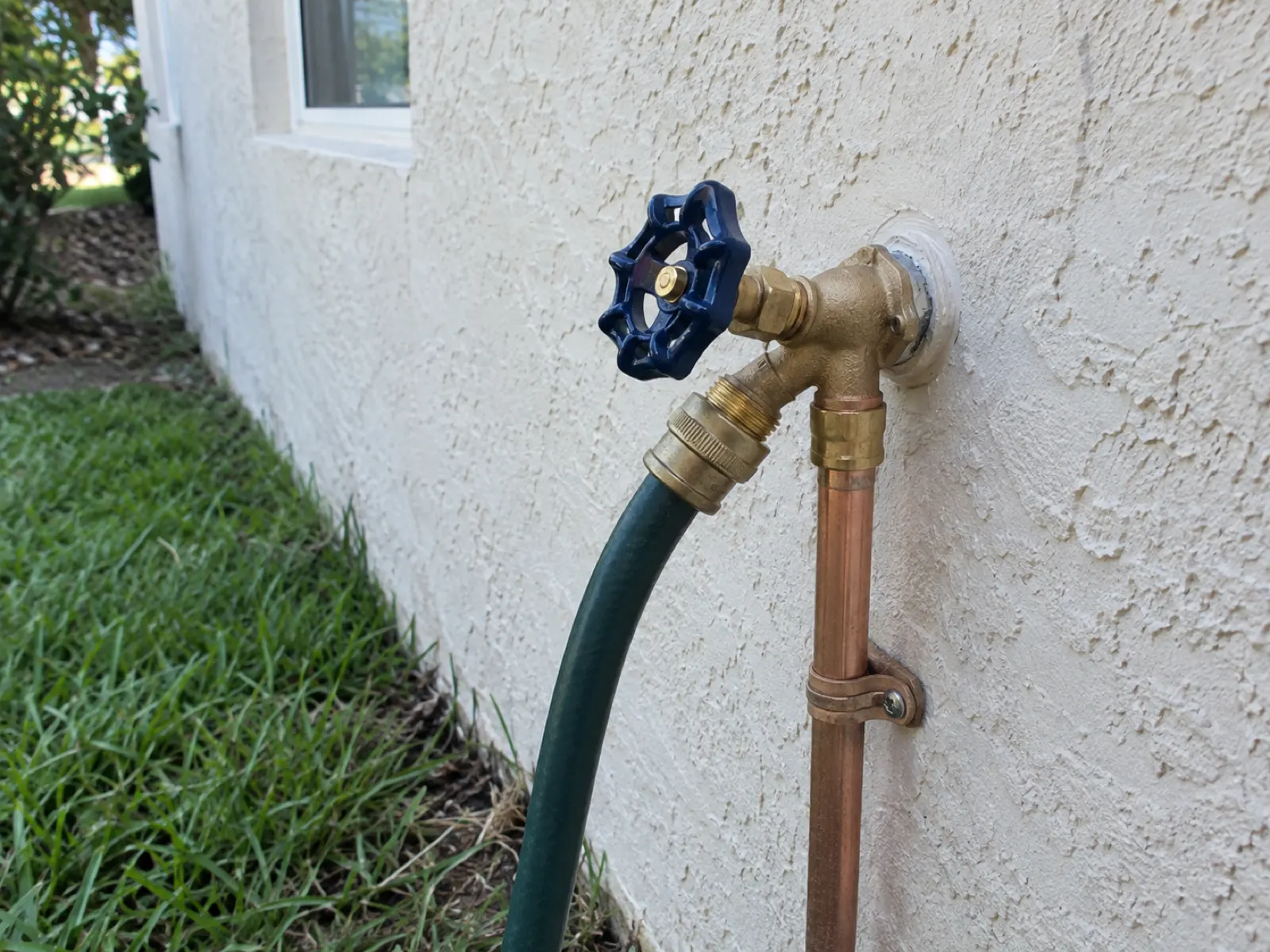
Outdoor spigots near the coast corrode faster because salt carried in the ocean air settles on the metal, holds moisture against it, and speeds up the pitting and wear that every outdoor fixture eventually faces. If you live in Jacksonville Beach, Atlantic Beach, Neptune Beach, Ponte Vedra Beach, or Fernandina Beach, it is common to find hose bibs that drip when closed, handles that barely turn, or a white and green crust around the fitting. The fix is usually simple: repair the spigot if its body is still sound, or replace it with a solid brass fixture suited to the conditions — and a few small habits help the new one last.
This guide covers the signs that a spigot is wearing out, the main types of outdoor faucet and what each is good for, the materials that hold up best near salt water, the small device that protects your drinking water from the garden hose, and how to decide between a repair and a replacement.
Why do outdoor spigots corrode so quickly near the beach?
Every outdoor faucet deals with sun, rain, and sprinkler overspray. Near the ocean there is one more ingredient: fine salt particles carried inland on the breeze. Salt draws moisture out of humid air and keeps a thin, damp film on metal surfaces long after the rain has stopped, which gives corrosion more time to work. Homes closest to the water tend to see it first, but salt air does not stop at the first row of houses.
The parts that suffer most are the ones that were never meant to be the toughest. Plated finishes can pit and flake, exposing cheaper metal underneath. Steel handle screws and pipe straps rust. The threads where the hose connects collect salt crust, and the packing around the valve stem dries out and starts to seep. Even brass, which holds up far better than most metals, dulls, discolors, and gradually wears when it spends years coated in salt.
What are the signs an outdoor spigot needs attention?
Outdoor spigots usually give some warning before they fail completely. Look for these:
- It drips from the spout when the handle is fully closed — usually a worn washer or seat inside.
- The handle is stiff, spins without shutting the water off, or has stripped where it meets the stem.
- Green, white, or gray-blue crust builds up on the body, on the hose threads, or where the spigot meets the wall.
- Water seeps from around the stem, just behind the handle, while the spigot is on — a sign the packing nut is loose or the packing is worn.
- The wall behind or below the spigot stays damp, stains, or feels soft, or there is moisture on the inside of that wall — a sign the leak may be at the connection behind the fixture rather than at the spout.
That last sign deserves the most attention. A dripping spout wastes water outside where you can see it. A leak at the connection inside the wall can dampen framing, drywall, or insulation for a long while before anyone notices, so it is worth having it looked at soon rather than waiting to see if it gets worse.
What types of outdoor spigots are there?
Outdoor faucets generally fall into one of three types, and each has its own strengths.
Standard compression hose bibs
This is the classic spigot with a round or wheel-style handle that takes several turns to open and close. Inside, a rubber washer presses down on a metal seat to stop the flow. Compression hose bibs are simple, widely available, and easy to service, but the washer wears a little with every use, which is why this type is the one most likely to drip when closed. Cranking the handle harder to stop a drip only speeds up that wear.
Quarter-turn ball valve spigots
A quarter-turn spigot uses a ball with a hole through it: turn the lever a quarter turn and the water is fully on or fully off. With no washer being squeezed against a seat, these valves tend to shut off cleanly without the gradual drip compression models develop, and the lever position shows at a glance whether the water is on. They are a popular choice when replacing a worn spigot.
Frost-free (long-stem) spigots
A frost-free spigot has a long stem that places the actual shut-off inside the wall, where it stays warmer, so the water in the outdoor portion drains away after use. In cold climates that design protects pipes from freezing. In Jacksonville, hard freezes are uncommon, so frost-free protection matters far less here than the packaging might suggest. They work fine, but they are not something most Florida homes need — and when one does leak at the valve end, the leak is inside the wall where it is harder to spot.
Which materials hold up best in salt air?
For a spigot near the coast, the material matters more than the style. Solid brass is the long-standing standard for good reason: it resists corrosion far better than plated or inexpensive alloy bodies, and a brass spigot can usually be repaired rather than thrown away when a washer or the packing wears out. A spigot that feels light for its size, or shows dull gray metal where a shiny coating has chipped, is usually a plated part that will not last long in salt air.
Handles are the other weak spot. A stainless steel handle avoids the rust that eventually locks up or breaks painted steel handles, and it is worth asking for if the old handle has already rusted through. Whatever fixture you choose, the connection behind the wall matters as much as the spigot itself — a well-made spigot on a corroded or poorly made connection will still leak where you cannot see it.
Do outdoor spigots need a vacuum breaker?
A vacuum breaker is a small device, either built into the spigot or screwed onto its hose threads, that keeps water in a garden hose from being pulled back into your home's water supply. That kind of backflow can happen if pressure in the supply drops — during a water main break, for example — while the end of the hose is sitting in a pool, a bucket, a puddle, or a sprayer bottle of fertilizer. The vacuum breaker lets air in instead, so the hose water stays out of your pipes.
Many newer spigots include one, and screw-on versions are easy to find. In salt air they can corrode, stick, or start spitting water from the top, so check them along with the spigot itself. Irrigation systems and some other connections use their own backflow prevention devices, which are a separate topic from the hose bib on your wall.
How can I make an outdoor spigot last longer at the beach?
A few small habits go a long way:
- Disconnect the hose when you are not using it. A hose left attached keeps the threads wet and salty, holds pressure on the connection, and hides corrosion from view.
- Rinse the spigot with fresh water now and then, especially after a windy stretch, and wipe off any crust before it builds up.
- Close the handle gently. Turning past the point where the water stops wears out washers and stems faster.
- If water seeps around the stem while the spigot is on, try snugging the packing nut — the nut just behind the handle — a small amount. If gentle tightening does not stop it, the packing needs replacing.
- Glance at the wall around each spigot every few months for stains, crust, or soft spots.
The easiest habit of all: take the hose off when you are done. It keeps salt and moisture out of the threads, and it lets you see the spigot clearly every time you use it.
Should I repair or replace a corroded outdoor spigot?
Repair makes sense when the body of the spigot is solid and the trouble is one of its wearing parts — a washer, a seat, the packing, or the handle. Replacement is usually the better choice when the body itself is pitted or crusted, the hose threads are worn, the stem is seized, the spigot has already been repaired more than once, or there is any sign of a leak at the connection inside the wall. In salt air, a spigot that has corroded badly enough to cause one problem is often not far from the next.
A replacement involves shutting off water to the house, removing the old fixture, checking the pipe and connection behind it, and installing the new spigot so it is secure against the wall and sealed where the pipe comes through. That seal keeps rainwater from working its way into the wall around the pipe, and checking the connection while the old spigot is off is the easiest moment to catch a problem behind it.
If one outdoor spigot on a coastal home is badly corroded, check the others. They have usually been exposed to the same salt air for the same number of years, and taking care of them in one visit is simpler than one at a time.
Our team has ten years of hands-on experience, and we are glad to look at a dripping or crusted spigot, tell you honestly whether it can be repaired, and give you a written quote either way. You can book a visit online, or call or message us at a time that suits you.
If you would like a plumber looking over your home on a regular schedule, our Family Plan membership includes a plumbing check-up twice a year — a natural time to point out an outdoor spigot that has started to drip or crust over.